Tuesday, December 05, 2006

New clashes hit Sunni neighborhood in Lebanese capital

New clashes hit Sunni neighborhood in Lebanese capital
By Rym Ghazal Daily Star staff

BEIRUT: Renewed clashes erupted in Beirut late Monday after the body of an opposition supporter slain a day earlier was carried through the heart of the capital by his comrades. Witnesses said opposition demonstrators in Downtown Beirut - enraged at the site of one of their own being carried in a coffin through the crowds - ran toward mostly Sunni Tariq al-Jaddidah carrying sticks. A security source at the scene told The Daily Star that the demonstrators, mostly Shiite members of the Amal Movement to which the late Ahmed Ali Mahmoud, 20, belonged, began wrecking cars and shops in the neighborhood. Many residents, most of whom support late Premier Rafik Hariri and his son Saad, descended from their homes to fight with the demonstrators. As The Daily Star went to press, the security source said Internal Security Forces troopers had come between the two groups. He could not confirm any deaths or injuries. He added that the area, and surrounding neighborhoods, were under a security lockdown. Mahmoud was killed in clashes Sunday in the Sunni neighborhood of Qasqas between Hizbullah and pro-Hariri Future Movement supporters, which also left two other Shiite youth, identified only by their family names as Shouker and Hammi, in critical condition at hospital. Earlier in the evening, as Mahmoud's body was brought into Riad al-Solh Square, close to the Grand Serail, a voice blared over loudspeakers: "Our response to Mahmoud's killing is numbers!"

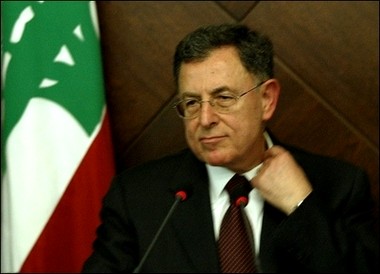
"Look!" the voice called out to Premier Fouad Siniora and his ministers, who have spent day and night inside the Serail since the assassination of Industry Minister Pierre Gemayel on November 21. "Our martyrs' blood will erase any feelings of anger and strife, and we will not react in violence as was hoped, but by heavier numbers of demonstrations until our demand is met." The army beefed up its presence around Beirut Monday after clashes the night before left at least 18 wounded and a nation fearful the incident would spiral out of control. Pleas for calm flooded in from politicians on both sides. Judicial sources told The Daily Star that security forces were searching for two persons believed to have been involved in setting fire to shops in Sabra Sunday and for the shooting of one of the youths in Qasqas. The sources added that three Syrians have been brought in for interrogation after witnesses said they saw two unidentified persons throwing rocks at opposition demonstrators as they headed to the protest. The army released a statement saying "several of the rioters" had been arrested. "The situation across Beirut and the country was acceptable, with minor incidents, but nothing like yesterday," the head of the ISF, Brigadier General Ashraf Rifi, told The Daily Star. "Of course we are preparing for the coming days, and we hope that things will calm down." In a statement, Sheikh Abdel-Amir Qabalan, vice-president of Higher Shiite Council, called on security forces to "intensify their investigations to find the criminals" who instigated Sunday's conflict. "We need to remain united and focus on keeping peace and not be dragged into sectarian discord," he said. Reuters quoted security sources as saying the military had increased its forces in Sunni districts that Shiite protesters must drive through to get to central Beirut. Meanwhile, Army Commander General Michel Suleiman met with Maronite Patriarch Nasrallah Butros Sfeir Monday to discuss the situation. No details were made public. In further condemnation of Sunday's clashes, a statement from the pro-government Lebanese Forces said: "Whatever our political stance on the demonstration ... we need to remain united and avoid violent clashes at any cost to protect civil peace." - With agencies

!قداس مار جرجس عمل معجزة .. وصار الشيعة يرتلون

قداس مار جرجس عمل معجزة .. وصار الشيعة يرتلون!
04 كانون الأول 2006 AL SAFIR

فاتن قبيسي- مع تقدم عقارب الساعة خلال نهار امس، كانت ساحتا <رياض الصلح> و<الشهداء>، تمتلئان تدريجياً بجماهير المعارضة. اصبح مشهد الحشود الشعبية حوالى الثالثة بعد الظهر، ومع اقتراب موعد المهرجان الذي شارك فيه الوزيران السابقان سليمان فرنجية وطلال ارسلان، يقارب ذلك الحشد الضخم الذي طُبع به المكان، في يوم التحرك الاول.

واذا كان يوم الاحد اعاد الزخم الى الشارع، الا انه كان ثمة شيء مختلف. الاعتصام كان <ناطقا> اكثر هذه المرة، قياساً الى اليومين الماضيين. الاجواء كانت اشد حماسة، الحناجر هتفت بكل انواع الشعارات والهتافات، مجموعات من الشبان شكلوا حلقات دبكة على وقع اغنيات وطنية. مجموعات من المشاركين هنا وهناك غاصوا في تحليلات الوضع السياسي، وهتفوا باسم هذا الزعيم او ذاك. عدد الخيم المنصوبة ارتفع امس، وكل خيمة مذيل عليها توقيع حزب من احزاب المعارضة المشاركة.
انه يوم عطلة، لم يكن امس نهاراً للاستجمام او النزهات. انقلب الطابع الشخصي لهذا اليوم الى الهم الوطني. ثمة مزيج طائفي ملأ المكان. شعارات الاحزاب وألوان اعلامها تداخلت في ما بينها. البعض اعتمر القبعة الصفراء التي كتب عليها: <لبيك يا نصر الله> وارتدى التيشرت البرتقالية. محجبة حملت صورة الجنرال وهتفت باسمه. حتى <البالونات> التي انتشرت في المكان من خلال باعة متجولين، جمعت الاصفر والاخضر والبرتقالي وتعانقت في اشارة الى توحد المسارات الحزبية.
فترة ما بعد الظهيرة انقلبت الى ساعات احتفالية. تذكر الى حد ما بأجواء <مهرجان الانتصار> الذي اقامه <حزب الله> بعد حرب تموز. <نصرك هز الدني>، ومقتطفات من خطابات السيد حسن نصر الله والجنرال ميشال عون تردد صداها مراراً عبر مكبرات الصوت.
عربات لبيع الفول والترمس والكعك، مشهد طارئ في وسط بيروت، يستعين بها بعض المعتصمين على الصمود. وعدد من الفانات لبيع القهوة والشاي تشحذ همتهم بجرعات من <الكافيين>. بسطات لبيع الاعلام اللبنانية والقبعات يستوقف اصحابها العابرين. وفان <للهيئة الصحية الاسلامية> مجهز بمستلزمات الاسعافات الاولية متواجد احتياطاً.

القداس

عند الحادية عشرة بدأ القداس الذي دعا اليه <التيار الوطني الحر> في كنيسة ما جرجس. <خلي الاصلاح قدامك> عبارة طبعت على <تيشرتات> برتقالية. شعور مستعارة كثيفة الحجم باللون ذاته غطت بعض الرؤوس. اللون البرتقالي غزا مدخل الكنيسة والساحة المؤدية اليه. يليه اللون الاخضر الخاص بتيار المردة.
<اصبح للعمالة نكهة.. شاي فتفت>. <عونك جايي من الله.. وحدك مردة وحزب الله>، <مجد لبنان لن يُعطى بعد الآن الا للجنرال وامثاله>.. كلها لافتات رفعها المشاركون في القداس. وحُملت صور الجنرال عون، واغلبها يعود الى فترة قيادته للجيش مرتدياً البدلة العسكرية. فيما احتلت صور فرنجية ازرار القمصان والفولارات المعقودة حول الرقاب.
ترأس القداس راعي ابرشية بيروت للموارنة المطران بولس مطر، عاونه المونسنيور ميشال عون وعدد من الكهنة. وشارك فيه النواب نبيل نقولا، عصام ابو جمرا، عباس هاشم، ابراهيم كنعان، وليد خوري، ادغار معلوف وشامل موزايا، مروان فارس. مسؤول العلاقات السياسية في <التيار الوطني الحر> جبران باسيل، السيدة مريم سكاف، رئيس حزب <التضامن> اميل رحمة وفاعليات من تيار <المردة> و<حزب الله> وحركة امل.
القى مطر عظة دعا فيها الى جمع الصفوف والتفاهم، <لأن الاخوة في وطن واحد وتحت سقف واحد يجب ان يتفاهموا، وما من صعوبة في ذلك، اذا قبل الاخوة بعضهم بعضاً وسمعوا بعضهم بعضا>. وقال:<لبنان اصبح وطن القديسين والشهداء>.
ورد النائب نقولا على اسئلة الصحافيين قائلاً: <مستمرون حتى النهاية لتسقط هذه الحكومة، ونحن نعرف نهاية الديكتاتوريات في العالم>.
واللافت هو ان معظم اللافتات المرفوعة بالمناسبة تحمل اسماء المناطق التي وفد اصحابها منها: زحلة، جونية، صفرا، جبيل، عمشيت، وغيرها. الامر الذي لم يكن اعتباطياً، بحسب عدد من المشاركين في القداس. <انه جمهور مسيحي ومن كل المناطق رداً على من يقولون بان المعتصمين من لون طائفي واحد>، يقول رئيس <هيئة السيدة> في زحلة غسان ملو. <وهذا القداس، يضيف، هو على نية شهدائنا، حتى لا احد <يزايد> علينا من خلال القول بانهم دفعوا شهداء>.
ويقول رمزي فرح متهكماً: <مار جرجس عمل اعجوبة اليوم.. الشيعة صاروا بيعرفوا يرتلوا <ابانا الذي في السموات!>.
<كل هذا الحشد هو اقلية بحسب <ال.بي.سي> و<يفتقد الى الحضور المسيحي> يعلق جهاد اشقر. ويؤكد <ما يجعلنا نتأكد بأننا على حق هو اعلام هذه المحطة وزميلتها <المستقبل>.
ويتدخل ايلي يوسف قائلاً لزميله:<انا مسيحي شيعي يا خيي.. وتستدل على ذلك من اسمي>. ويتساءل: <اذا كسروان وجبيل والمتن صاروا شيعة، ليش البطرك بعدو ماروني؟>.
ويشير رمزي الى سيارة كبيرة خاصة بفريق تلفزيون <المنار> ليقول: <هينة تشوفي القداس <عالمنار>. انها قمة التعايش>. ويضيف:<اليوم عم يعملوا قداس كمان بالسراي.. بدنا نستقيل، بركة بيعملوا متلنا!>.
ويستوقف الحديث الدائر رجلا مسنا من العاقورة يدعى جورج الهاشم، فيتساءل: <وينو سيدنا البطرك، ليش ما بقدّس هون، بقدّس بس مع جعجع اللي قتل المسيحيين؟>.
تقاطعه شفيقة دحدوح من الصهيلة بقولها: <ما بدنا بطرك لقريطم، وكل اللي عم بساندوا السنيورة اليوم كانوا ضدنا بحرب تموز؟>.
قرابة الساعة، استمر التوافد متواصلاً للمشاركة في القداس. سيارات وفانات كانت تنقل الناس الى المكان الذي ساده الخشوع والصمت. وما ان انتهى القداس واعلن عن مشاركة فرنجية في المهرجان بعد ساعات قليلة، حتى غرق المشاركون في نوبة من الهتافات:
<انت البطرك يا سليمان>. <طاق طاق طاقية.. حزب وحركة وعونية>. <ال.بي.سي> قولي الحق نحنا الاكثر ولاّ لأ>. <ما بتنباع الرئاسة الا لعون القاسي>. <اخضر اصفر ليموني بدنا نسقّط الحكومة>. <اخضر اصفر كلمنتين بدنا نسقّط سعد الدين>.
في هذه الاثناء كانت ساحة القداس تفرغ تدريجياً لصالح ساحتي <الشهداء> و<رياض الصلح<. الساحتان عند الظهيرة كانتا عامرتين بجماهير المعارضة. عناصر اللجنة التنظيمية التابعة <للتيار الوطني الحر> و<الإنضباط> التابعين لحزب <الله> انتشروا بكثافة داخل وخارج الساحتين.
في الطريق المؤدية الى ساحة الشهداء، انتشرت صور الوزير السابق طلال ارسلان تحت كلمة <الضمانة> ودخل بعض انصار <الحزب الديموقراطي اللبناني> في حلقات دبكة على وقع اغنية <السيف اللي عالاعداء طايل>. والساحة شهدت ما يشبه المهرجان المصغر. اغاني وطنية هادرة اشعلت المشاركين حماسة: <عونك جايي من الله يا لبنان الغالي>، <نزل التيار عالارض>، <حي على الاصلاح>، <لعيونك يا سليمان>، <نحنا رجالك يا سليمان>.
كان المعتصمون يرفعون تارة قبضاتهم مرددين الاغنيات الثورية، واخرى يهتفون: <الله ونصر الله والرابية كلها>، <ايه ويلا السنيورة طلاع برا>. فيما كان احد المنظمين يدعو عبر مكبرات الصوت التجمعات خارج الساحة واسراب الواقفين فوق جسر رياض الصلح المقابل، الى الانضمام الى الساحة بداعي التنظيم.

باسيل

قرابة الواحدة اعتلى جبران باسيل المنبر والقى كلمة بالعامية قال فيها: <الكل يهربون ونستمر واقفين، لأننا ام الصبي واصحاب القضية>. مستشهداً بالمواجهة مع سوريا ومع اسرائيل.
واضاف: <تحاورنا بشأن الانتخابات النيابية والتحالفات، ثم بشأن تشكيل الحكومة، ثم بشأن المواجهة مع اسرائيل، ثم بشأن تشكيل حكومة وحدة وطنية، وكانوا في كل مرة يقولون لنا: <ما الكم محل بيناتنا.. عم يعطونا المقاعد كأنها منّة وعم نشحدها شحادة. نحن واياكم نأخذ حقوقنا بايدينا، وراسنا مرفوع، وما حدا بصنفنا مسلمين ومسيحيين، كلنا لبنانيين>.
واصر باسيل على المطالبة بتشكيل حكومة وحدة وطنية بمشاركة الفريق الحاكم <على علاته>، الا انهم يرفضون لأنهم يستقوون بالخارج>.
وختم بقوله: <نحن و<حزب الله> وحركة امل وكل المعارضة. لسنا وحدنا، لا احد يخاف. ولا احد يهوّل علينا بالمشاكل والفتن. هذه المعركة ما بتنتهي الا بالانتصار، ولا مرة وعدناكم بشي الا وصار>.
ثم تحدث منسق عام التيار بيار رفول عن المبادرة التي من المقرر ان يحملها معه امين عام الجامعة العربية الى لبنان، قائلاً <اذا لم تكن مناسبة رح تمشي مبادرة الشعب الحر الشريف>.
وقال: <لا يمكنهم العيش الا على النعرات الطائفية، من خلال وحدتنا سنسقطهم ونفتفتهم. يراهنون على قصر النفس لدينا، وكذلك فعلوا خلال حرب تموز، وكنا نبني في كل يوم مدماك النصر اكثر فأكثر و<هنّ عم بهرّوا>.

Monday, December 04, 2006

Fayrouz Brightens a Dark Time in Beirut


A Diva Brightens a Dark Time in Beirut
By KATHERINE ZOEPF

BEIRUT, Lebanon, Dec. 2 — As she stepped onto the stage, a tiny figure in apricot-colored silk, some in the audience broke into tears, while others clapped and cheered. As she lifted her lace parasol, turned her famous hooded eyes to the balcony, and her song began, ululations of joy erupted from several elderly Lebanese ladies in formal evening dress seated near the stage. Fayrouz was performing in Beirut again at last, and her country, it seemed, had never needed her more.

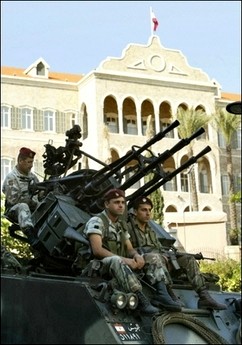
In recent days, armored personnel carriers have moved into position along highway on-ramps, at major Beirut intersections and on a bridge overlooking the Hezbollah demonstrators at Martyrs’ Square, and fears and rumors that civil war might return have swirled. All the while, Beirutis of every sectarian stripe seemed to agree on this: Fayrouz must sing as planned. In the Arab world, the emotional resonance this 70ish diva commands is difficult to overstate. Many of the great anthems of Palestinian and Lebanese nationalism — not factionalism — are her songs. Passengers on cheap overnight buses between Syrian cities know that morning has come and their destination lies near when the driver turns on Fayrouz. From Damascus to Ramalla to Amman, Fayrouz’s unmistakable deep, quavering tones echo from radios and tape decks in cafes, shops and taxi cabs, reminding people of the long-lost rhythms of village life and the longer-lost, golden years of peace. “Fayrouz is the music of our lives,” said a young Arab Israeli man in Haifa last week, who gave his name as Said. “She plays from dawn till midnight, every day, everywhere we go. She is the symbol of Lebanon and of Palestine. We all love her.”

Just how true that is in Lebanon seemed clear on Friday night, as she took the stage before tens of thousands of people at a convention center on the Beirut waterfront, to perform in “Sah el Nom,” a musical comedy. They had braved the demonstrations, blocked roads and multiple security checks to occupy white plastic chairs while scores of soldiers with AK-47s patrolled outside. Some came from Beirut, some from Saida, a mainly Sunni town considered the gateway to southern Lebanon. Rosine Hajjar, 28, a psychotherapist from the Bekaa Valley, a predominantly Shiite region, said she had planned and saved for months for this night. “Fayrouz is a dream for all Lebanese people,” Ms. Hajjar said. “She is majestic, she is mysterious, and it is very rare to see her. There were so many rumors this weekend of a coup d’état. But Fayrouz refused to cancel, and my sisters and I are so happy. Whether there is a new civil war or not, I feel sure that this will be the first and last time in my life that I will ever see her.” Amal Hachem, 29, a lawyer from a Christian neighborhood in Beirut, said: “The fact that Fayrouz went ahead with this means a lot for Lebanese people. She is the symbol of Lebanon. Lebanon in war, Lebanon in peace, and Lebanon in revolution. She brings us together.”

“Sah el Nom” concerns a self-serving king who demands impossible favors when his people ask for help, but who comes to change his ways through the intervention of a good, brave village woman, played by Fayrouz. But even symbolism and inspiration sometimes have to take a back seat to age and the sound requirements of a convention center. As the performance progressed, there were hisses and whispers — soon hushed by diehard admirers — as her lips occasionally moved out of time to the voice singing from the speakers, or as she focused on dancing, and the voice sang on. Born more than 70 years ago — no one seems certain just how many — as Nouhad Haddad, she was dubbed Fayrouz, or Turquoise, by an early musical mentor. For more than 50 years, she and several family members — her husband, the composer Assi Rahbani, his brother Mansour, a lyricist, and a son, Ziad — have been the musical royal family of the Levant. The Rahbani brothers wrote most of the material that Fayrouz has regularly performed throughout her career, including “Sah el Nom.”

They are the rarest of public figures in Lebanon: artists whose standing is above politics. Throughout the 15 years of Lebanon’s civil war, they never took sides. Fayrouz was to sing in “Sah el Nom” at the ancient Roman acropolis in Baalbeck, where an international music, theater and dance festival is held each summer. But the Israeli-Hezbollah war began that very evening, and the performance was canceled. Throughout the 34-day war, Fayrouz’s patriotic songs, including “To Beirut” and “The True Lebanon Is Coming,” were everywhere. But she never appeared. The festival’s organizers decided to move the program to Beirut. Fayrouz had not performed here since 1994, and ticket sales were frantic. May Arida, the festival’s president, watched as the audience filed in on Friday night. “We knew there would be some fear,” she said. “We didn’t make the decision until yesterday, but we finally decided that the show must go on. In a difficult time, we need Fayrouz.”

At least 1 killed as violence breaks out across Beirut

At least 1 killed as violence breaks out across Beirut
Both sides lose control of supporters

By Leila Hatoum Daily Star staff

BEIRUT: A series of tit-for-tat clashes broke out across the Lebanese capital Sunday, resulting in the death of one youth as both opposition and pro-government parties lost control over their supporters. Following months of escalating political tension and three days of opposition protests, a major clash erupted in Qasqas, a predominantly Sunni area in Beirut, police officials said. Ahmed Ali Mahmoud, 20 and believed to be a supporter of the Amal Movement, was shot during the Qasqas incident. It was not clear where the gunfire came from, the officials said. He died before reaching hospital. The clash started when a group of Hizbullah supporters were returning from central Beirut's and passed through the neighborhood, heavy with late Premier Rafik Hariri's Future Movement supporters. A high-ranking Lebanese Army said the two sides threw stones at each other before shots were fired. Four other people were hurt in the clash. The official said the army "intervened to stop the clashes from escalating." As per stories told from both sides, convoys of cars and mopeds from both the opposition and pro-government parties had been provoking each other throughout the day.

In other clashes Sunday night, one person was shot and a few injured in the Bourj Abi Haidar area. A few streets away, in Barbour, another person was arrested in a shooting incident. An attempt was made to block the old road leading to Beirut's Rafik Hariri International Airport with burning tires. Some roads outside Beirut were also blocked, including in Naameh, and soldiers "resorted to firing in the air to open it," a source from the army told The Daily Star.

Premier Fouad Siniora contacted his allies, the Internal Security Forces and Speaker Nabih Berri, to try and control the situation. Hizbullah also told its allies - the Free Patriotic Movement (FPM) and the Marada Party - to control their supporters. Officials from Future, Hizbullah, Amal, the Lebanese Forces and the FPM told The Daily Star that they had given their supporters clear guidelines not to engage in provocations or respond to them. Future leader MP Saad Hariri called upon his supporters and his allies to "maintain calm and refrain from responding to any provocation attempts, whatever its form." Hariri called on "all Future Movement supporters ... to be careful of sedition and take care of infiltrators. I call upon them to cooperate with the security personnel and the Lebanese Army ... You are asked not to make a move without a clear decision from the leadership of the Future Movement ... which is cooperating in this regard with its allies from the March 14 Forces."

Yet calls for calm didn't prevent the shooting of Amin Itani, an ISF member. During the Bourj Abi-Haidar clash, Itani was shot in the neck after "suspected Amal supporters, who wanted to close down his father's offices supporting the Future Movement, fought with him and his father," a witness said. The witness, who wished to remain anonymous, said that the men were "not from the area but they are known to be Amal supporters." But an Amal official denied the claim, saying opposition supporters were being provoked. The official added that the person arrested by the army in the shooting incident in Barbour "is Imad Fatha, the head of the Future Movement in the area." The Future Movement said it could not confirm that charge.

Earlier, Christian opposition members formed a tide of (FPM) orange and (Marada) green as they flocked to Downtown Beirut's St. George Church to attend Sunday Mass. The colorful move was a response to reports by pro-government media that few Christians were actually taking part in the protest. Former Interior Minister Suleiman Franjieh, who heads Marada, addressed the crowd in Beirut, accusing the government of being responsible for Lebanon's economic problems.

Friday, December 01, 2006

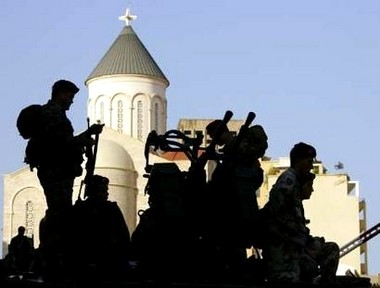
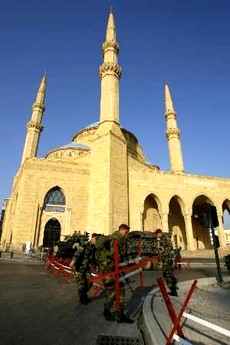
A Church, a Mosque and the Grand Serail...


Was Lebanon another oil war?
By Joel Bainerman November 30, 2006

Could the war in Lebanon been more about protecting oil pipelines and America's geo-strategic goals than Hezbollah shooting rockets into northern Israel?

A Canadian economics professor thinks so.

The inauguration of the Ceyhan-Tblisi-Baku (BTC) oil pipeline, which links the Caspian sea to the Eastern Mediterranean, took place on the 13th of July, the day after the war began. Michel Chossudovsky, of the University of Ottawa and Director of the Center for Research on Globalization, reports that just one day before the Israeli air strikes, the main partners and shareholders of the BTC pipeline project, including several heads of State and oil company executives were in attendance at the port of Ceyhan for a reception hosted by Turkey's President Ahmet Necdet Sezer. Among the invited guests BP's CEO, Lord Browne, and senior government officials from Britain, the US and Israel, including Minister of Energy and Infrastructure Binyamin Ben-Eliezer. BP heads the BTC pipeline consortium. Other major shareholders include Chevron, Conoco-Phillips, France's Total and Italy's ENI. Chossudovsky points out that what is so important about the BTC pipeline it that it bypasses the territory of the Russian Federation. It transits through the former Soviet republics of Azerbaijan and Georgia, both of which have become US "protectorates", who are already in a military alliance with the US and NATO. Azerbaijan and Georgia have deep military cooperation agreements with Israel.

"I believe that there are strategic objectives underlying the Lebanon war which are tied to oil and oil pipelines," Chossudovsky says. "By bypassing Russia, Russia has been weakened. Now, Israel is slated to play a major strategic role in 'protecting' the Eastern Mediterranean transport and pipeline corridors out of Ceyhan. Also, Israel will increase dramatically the import of oil from the Caspian sea for its local economy." Chossudovsky, whose international best seller "The Globalization of Poverty " has been published in eleven languages, insists that the bombing of Lebanon was part of a carefully planned and coordinated military road map and that the next stage of the war which would include attacks against Iran and Syria- which he says will be done on behalf of oil interests- not because of any need to safeguard the stability of the region. "The end result is Israeli territorial control over the East Mediterranean coastline. With this pipeline, the Eastern Mediterranean will now have an 'energy corrido' to the Caspian Sea basin. What is important to remember is that all of the participants in the pipeline are US allies- including Israel, Turkey, Georgia, and Azerbaijan."

For Israel, Chossudovsky's conclusions are chilling: Israel is now part of what he says is "an Anglo-American military axis which serves the interests of the Western oil giants in the Middle East and Central Asia." And yet the Israeli public has no idea that these aims are what might have motivated its government. Most Israelis believed that the IDF tried to do what they could in order to safeguard the security of the Israeli public- and simply failed. Didn't do the job right. One might even conclude that the plan could have involved Israel being weakened (we couldn't have been any worse- could we?)-- so that Hezbollah can score a victory of some sort and thus keep not only southern Lebanon unstable for years to come but much of north western Lebanon and south western Syria along the Mediterranean coastline.

Think of this in the same way that the Oslo Accords strengthened the Palestinians --while weakening Israel -- and led to ten years of unprecedented instability in Israel. The same future may have been deemed for Lebanon with the recent war just the first act in the play. The end result will likely be the US insisting that its Israeli troops be stationed along this shoreline- not to protect the pipeline- but to "ensure regional stability". This is terrible because the Israeli public will be duped into providing the security and protection for a private pipeline deal? Well, not really. There are huge rewards for Israel. The BTC pipeline will channel oil to Western markets via an underwater Israeli-Turkish pipeline that will link Ceyhan in Turkey to the Israeli port of Ashkelon (a distance of 400 km) and then through an existing pipeline between Ashkelon and Eilat which was shut down in the late 70s after the fall of the Shah and the loss of Iranian oil. Israel will undoubtedly collect some fee on each barrel of oil that is transhipped over its territory on the way to foreign markets. As it can be assumed the price of oil will continue to rise -- if Israel can be guarantee a reasonable price for its oil and gas in the way of a 30-50 year supply contract -- it would not only make the cost of acquiring Israel's energy resources much cheaper and efficient, but also Israeli energy and economic planners could plan, decades in advance, for Israel's hydrocarbon needs. Also involved in this project is a pipeline to bring water to Israel, pumping from upstream resources of the Tigris and Euphrates river system in Anatolia -- yet another huge benefit for Israel. In April 2006, Israel and Turkey announced plans for four underwater pipelines, which would bypass Syrian and Lebanese territory

The downside of the deal? The pipeline deal directly assails Russian interests at a time when Israel-Russian economic and political relations are warming and deepening. "Diverting Central Asian oil and gas to the Eastern Mediterranean under Israeli military protection, for re-export back to Asia, serves to undermine the inter-Asian energy market, which is based on the development of direct pipeline corridors linking Central Asia and Russia to South Asia, China and the Far East," says Chossudovsky. "Ultimately, this design is intended to weaken Russia's role in Central Asia and cut off China from Central Asian oil resources. It is also intended to isolate Iran." Chossudovsky points out that Moscow has responded to the US-Israeli-Turkish design to militarize the East Mediterranean coastline with plans to establish a Russian naval base in the Syrian port of Tartus: Moscow also intends to deploy an air defense system around the base to provide air cover for the base itself and a substantial part of Syrian territory. "Moreover, Moscow and Damascus have reached an agreement on the modernization of Syria's air defenses as well as a program in support to its ground forces, the modernization of its MIG-29 fighters as well as its submarines (as was reported in Kommerzant, on 2 June 2006). In the context of an escalating conflict, these developments have far-reaching implications." Chossudovsky points out that these underwater pipeline routes do not overtly encroach on the territorial sovereignty of Lebanon and Syria. On the other hand, the development of alternative land based corridors (for oil and water) through Lebanon and Syria would require Israeli-Turkish territorial control over the Eastern Mediterranean coastline through Lebanon and Syria. "The implementation of a land-based corridor, as opposed to the underwater pipeline project, would require the militarization of the East Mediterranean coastline, extending from the port of Ceyhan across Syria and Lebanon to the Lebanese-Israeli border. Is this not one of the hidden objectives of the war on Lebanon? Open up a space which enables Israel to control a vast territory extending from the Lebanese border through Syria to Turkey?"

Beirut merchants fear sit-in will deal fatal blow

Beirut merchants fear sit-in will deal fatal blow
'30 percent of downtown restaurants will close'

By Osama Habib Daily Star staff

BEIRUT: A prolonged sit-in and demonstrations in Beirut Central District will put many companies, restaurants and shops out of business, merchants warned on Thursday. "The situation is horrific. If the sit in lasts for 10 days at least, then I can assure you that 30 percent of the restaurants in the BCD will close their businesses for good," Paul Ariss, the president of the Restaurant Owners Association, told The Daily Star. Hizbullah and its allies are expected to stage a massive demonstration Friday afternoon to press the government of Prime Minister Fouad Siniora to give up more than one third of the Cabinet seats to opposition groups. But Siniora has indicated that he will not give in to the opposition's demands, prompting analysts to expect a long political crisis in the country. The Economic Committee, which represents the main business groups in the country, has met all of the leading politicians from both camps to highlight the negative effects of the demonstrations on the fragile Lebanese economy. But despite the intensive meetings, the committee was not able to get one pledge from opposition leaders to call off the demonstrations. "Friday's highly anticipated wide demonstrations in the heart of the Lebanese capital will virtually shut down most businesses, shops and restaurants in Beirut Central District and all the adjacent areas," Ariss said. He added that the restaurants in Lebanon are still reeling from the fallout of the war with Israel this summer and that any more security setbacks will cripple the industry. "I don't think we will have any customers if the protestors decided to stage a sit-in at the BCD for a long time," Ariss said. He added that some of the small sandwich shops may open to feed the protestors, but stressed that the restaurant sector in general will stay closed during the sit-in.

Ariss said each restaurant in the BCD has invested more than $300,000, meaning that the 100 restaurants have a combined investment of $30 million. The BCD is home to hundreds of companies, banks and shops which employ 3,000 people. The private sector has already incurred more than $5 billion in direct and indirect losses due to the war with Israel and analysts fear that the country's GDP will fall below zero percent by the end of the year. Merchants had hoped to make up for the previous drop in the volume of business during the Christmas season as many Arab tourists booked rooms in hotels in Beirut and the mountains. Now they fear the expected tourists will cancel their plans. Nadim Assi, the president of Beirut Merchant Association, said traders want a break from the continued political tension. "Merchants have compiled huge losses and debts since the July war and if demonstrations are carried out as promised, these losses will mount," he said. Assi appealed to all political groups to set their differences aside for the sake of the country and the economy. Economist Marwan Iskander predicted the private sector will loose around $30 million a day if the demonstrations take place. "Every day of strike will further harm the economy and shrink the $24 billion GDP," Iskander said. He added that the political stalemate will also reduce the chances of the donor conference taking place in Paris next year. "Even the opposition wants the Paris III conference to be convened in order secure grants and soft loans," he said. Iskander believes that the crisis will come to an end because no one has an interest in seeing the country fall apart. Adnan Kassar, president of the Economic Committee, said business leaders have not yet decided on their next step if the crisis continues. "We are studying all options," he said, declining to reveal whether the committee will call for another open strike.

Naharnet Lebanon News

iloubnan.info

Marketing in Lebanon